
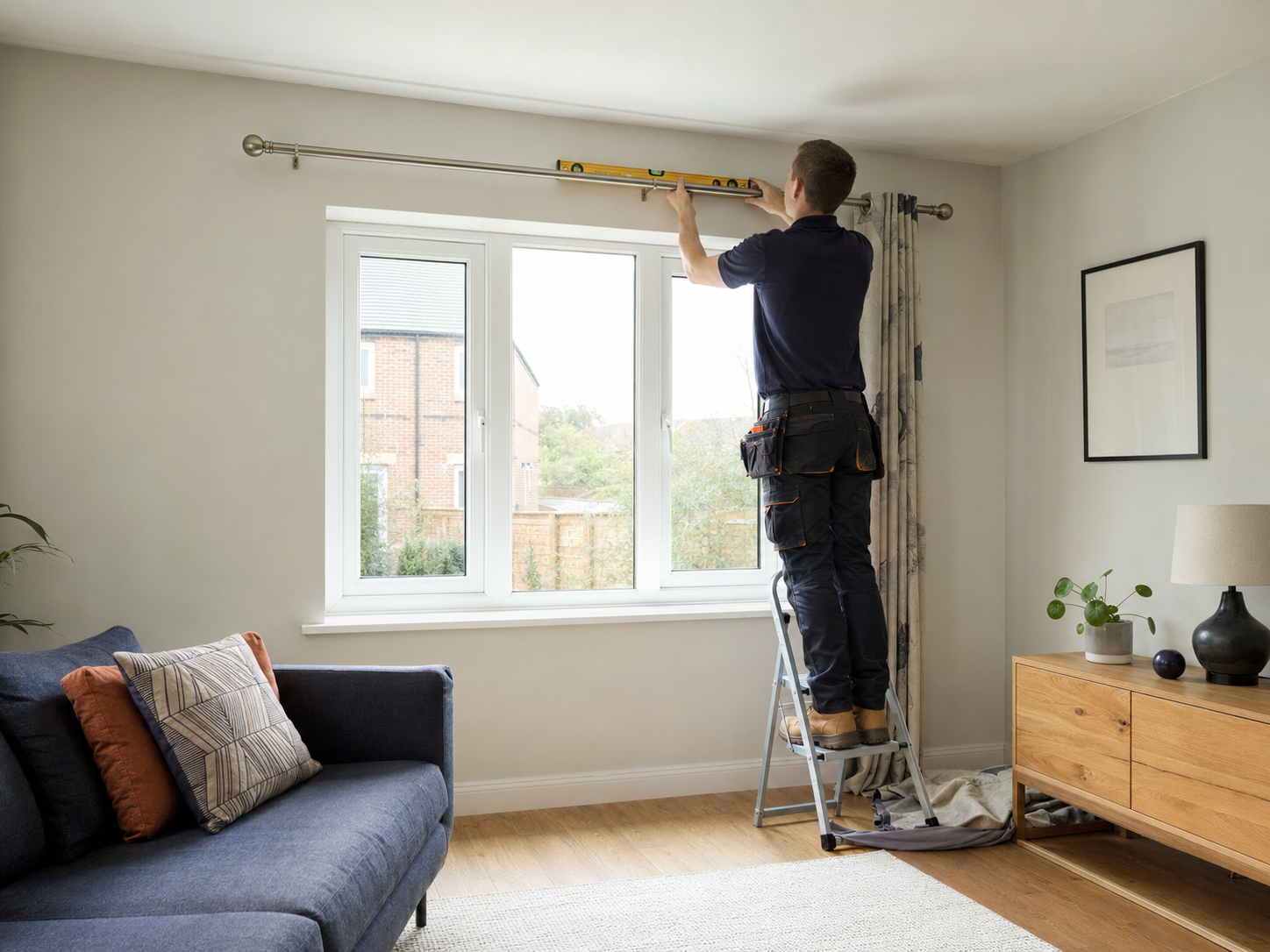
Curtain-pole position affects how the curtains hang, how much light enters the room and whether the window feels balanced. The final position should be planned alongside the curtains rather than treating the pole as an isolated fitting.
Check the available width
The pole normally extends beyond both sides of the window so the curtains can draw back without covering too much glass. The required extension depends on curtain fullness, pole style and space beside the opening.
Look for nearby walls, wardrobes, radiators, switches and other restrictions. A decorative finial also adds width beyond the usable pole.
Choose the height
The pole needs enough clearance above the window frame for brackets and rings or eyelets. A higher position can make the window appear taller, but the curtain length must suit the finished height. Existing curtains may limit the available adjustment.
Check the curtain type
Eyelet curtains, rings and pencil-pleat headings sit differently in relation to the pole. Measure from the correct point on the curtain so the finished hem lands where intended.
Consider the centre support
Longer poles and heavier curtains may require a centre bracket. Check that there is a suitable location above the middle of the window and that the curtain arrangement works with the support.
Mark and review
Mark the proposed bracket positions with tape and check that they are visually balanced. Measure the window rather than assuming both sides are perfectly equal. Where several windows share a room, consider whether matching pole heights will look better.
Before requesting a quote, send the pole link, curtain type, window width, wall photograph and number of windows. This helps identify the likely scope before the appointment.