
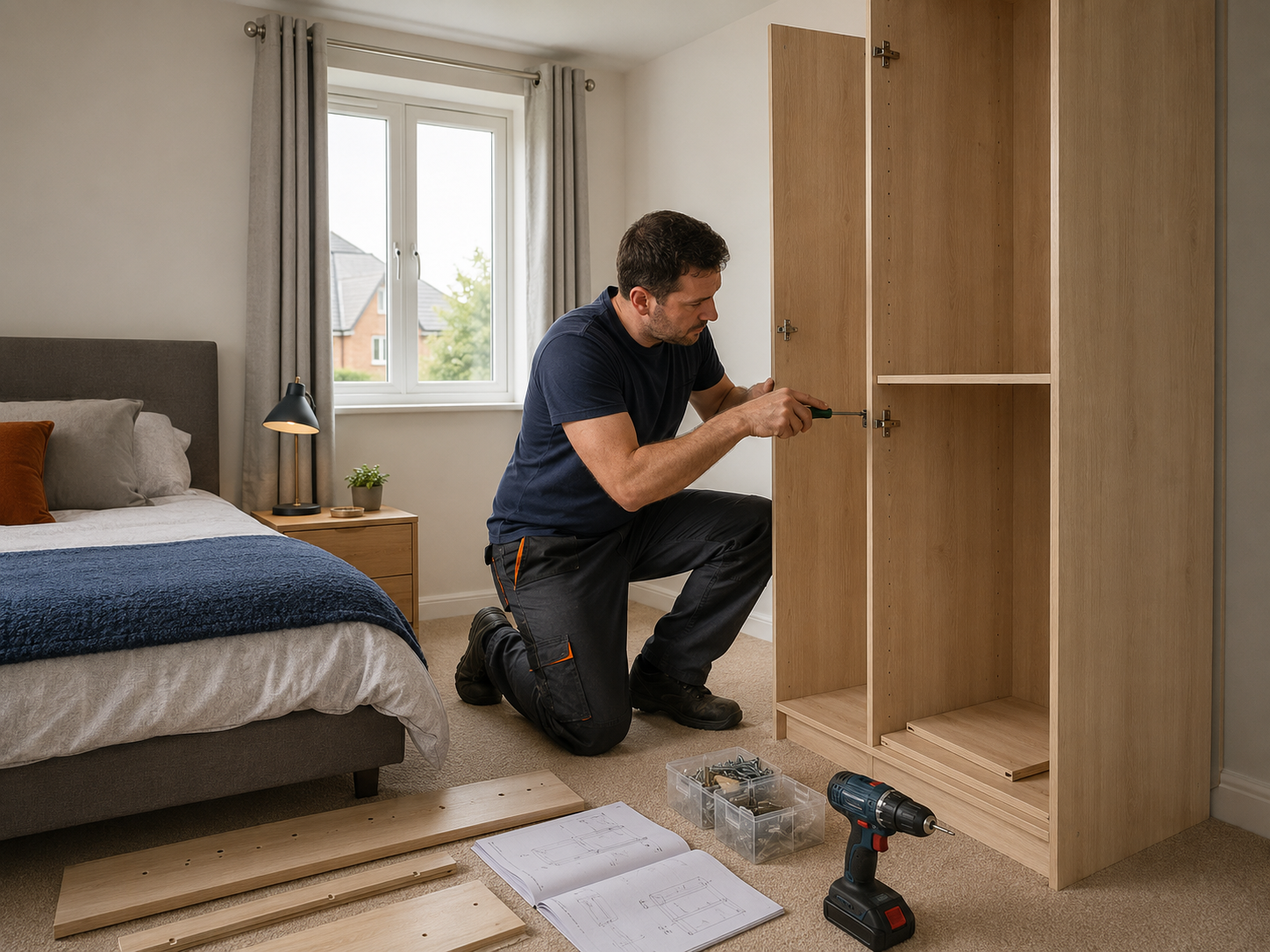
Many tall or narrow furniture products include a wall restraint. It is an important part of the manufacturer's installation instructions rather than an optional leftover fitting.
Why restraints are supplied
Opening drawers and doors changes the balance of furniture. Loads placed high up, uneven floors and people pulling or climbing can increase the risk of tipping. A restraint helps limit that movement when it is correctly matched to the furniture and wall.
Read the product instructions
Check whether the manufacturer requires the unit to be secured and identify the supplied restraint. Some products include a strap or small bracket but expect the installer or customer to choose wall fixings appropriate to the wall construction.
Do not substitute random hardware without understanding how the restraint is intended to work.
Consider the wall and position
The wall type affects the fixing approach. The final furniture position should be confirmed before securing it, including clearance from skirting boards and any effect on doors or drawers.
Known pipes, wiring or unusual wall construction should be disclosed before work begins. If a safe fixing position cannot be identified, the installation may need to pause while an alternative is considered.
Keep the restraint in place
If the furniture is moved later, do not leave the restraint disconnected. Review the manufacturer's instructions and secure it again in the new position. Never assume that a unit is stable simply because it stood safely in another room.
Plan before assembly
Send a product link, photograph of the intended wall and any known wall information with your enquiry. This helps include the restraint requirement in the job assessment rather than discovering it after the furniture has been assembled.