
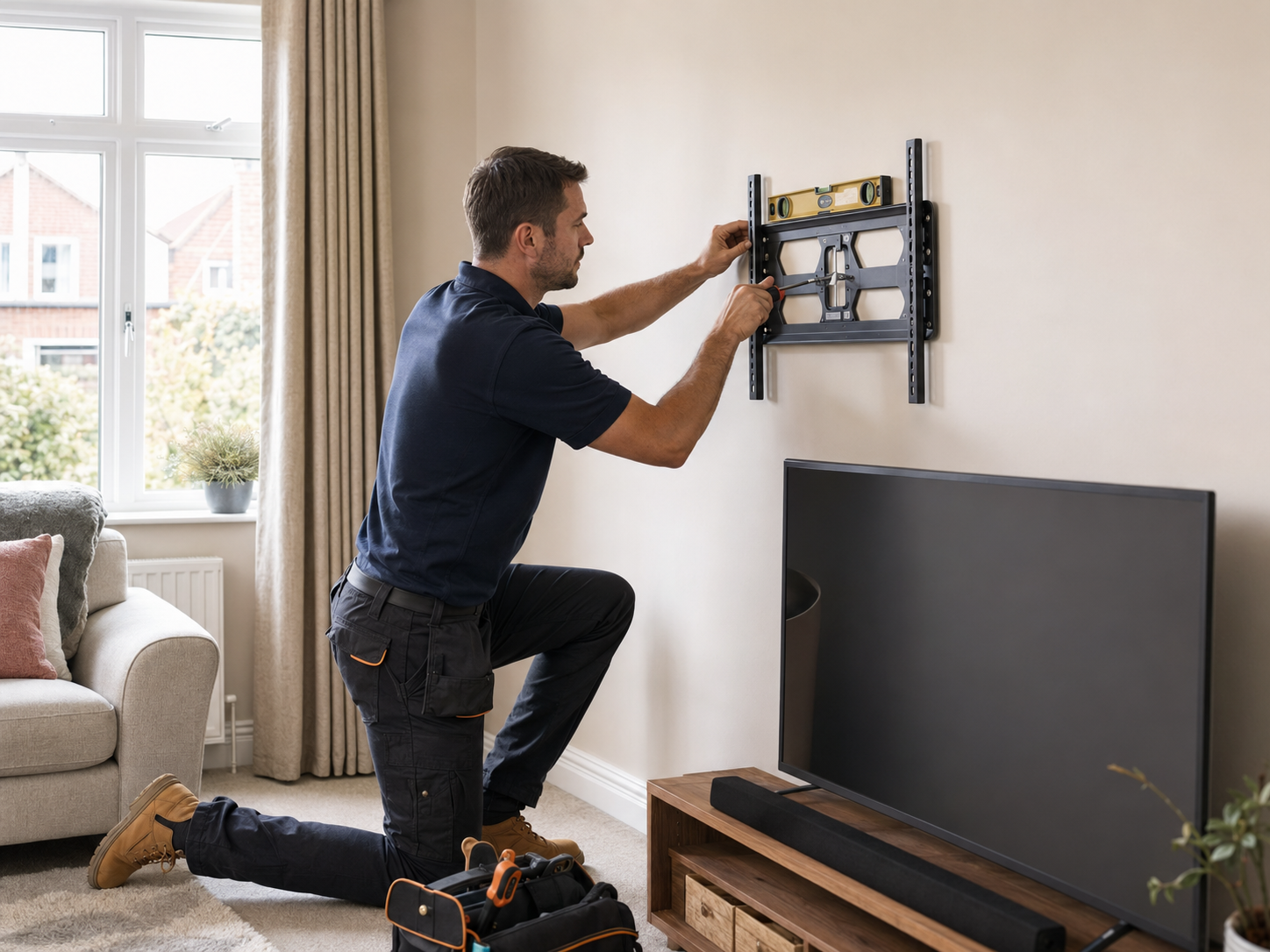
A wall-mounted television should feel comfortable from the seat you actually use. There is no universal measurement that works in every home because sofas, screen sizes and room layouts all differ.
Start from your normal viewing position
Sit where you usually watch television and look naturally towards the wall. The middle of the screen should generally remain close to your relaxed line of sight. Mounting a television much higher can become uncomfortable during longer viewing sessions.
A bedroom television or a screen viewed from reclining furniture may need a different position from a living-room television. This is where a tilting bracket can sometimes help.
Check the whole screen, not only the bracket
The bracket often attaches above or below the centre of the television, depending on the VESA hole position. Measuring only the proposed bracket location can therefore produce a different finished height than expected.
Use masking tape to mark the complete television outline on the wall. Sit down again and check:
- Whether the screen feels naturally positioned
- Whether furniture blocks any part of it
- Whether the television dominates the wall
- Whether sunlight or room lighting may create reflections
- Whether cables can reach without being stretched
Allow for furniture and soundbars
A media unit, fireplace, soundbar or decorative shelf may set a minimum height. Leave enough room for ventilation, cables and equipment while avoiding a large, awkward gap.
Agree the position before drilling
Small changes are easy while the screen position is marked with tape. They become much harder once holes have been drilled. Everyone who regularly uses the room should be happy with the proposed position first.
For a fitting quote, send the TV size, model, bracket link, wall photograph and a photograph taken from the main seating position.