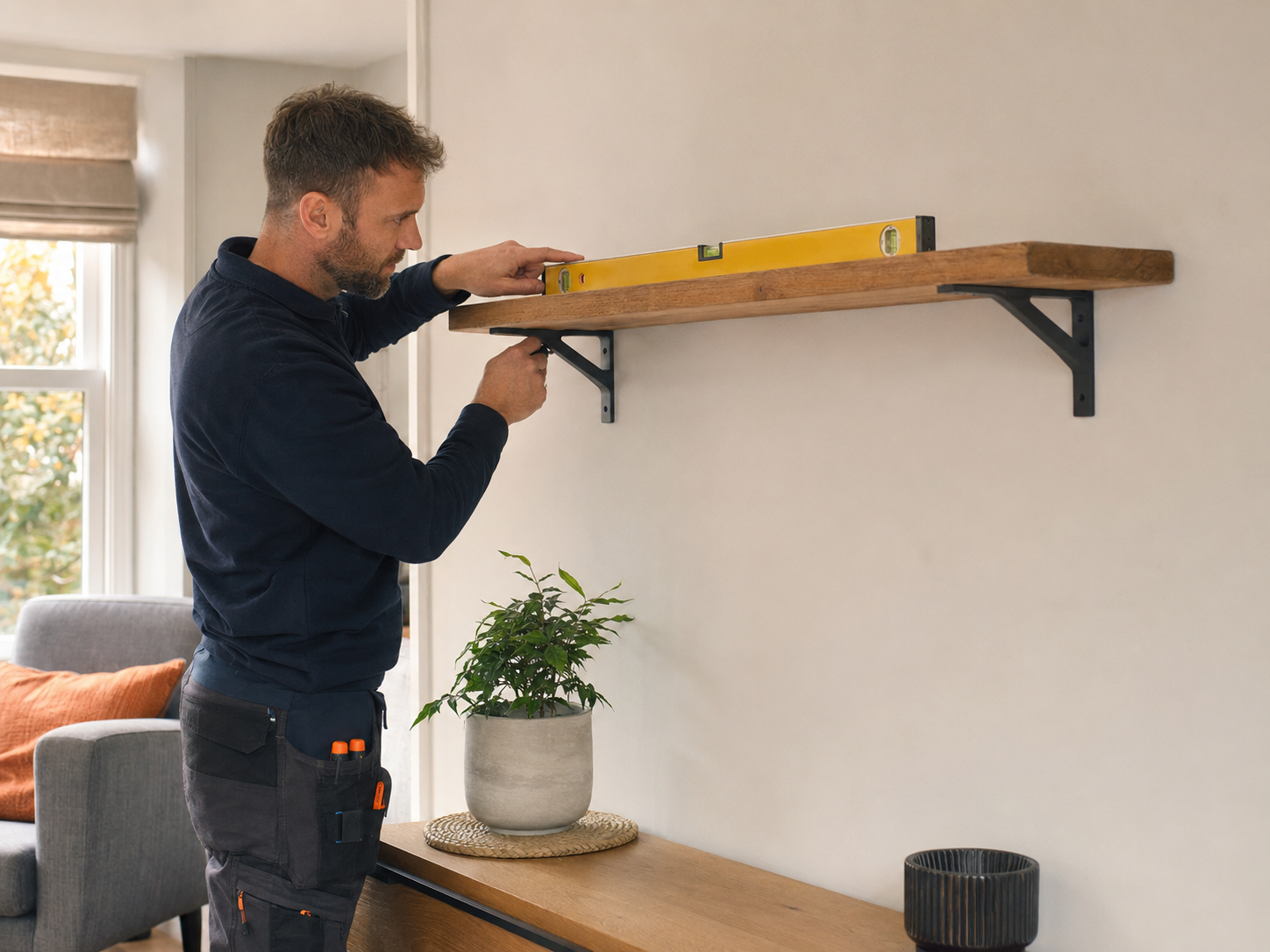
The most useful shelf spacing comes from the items that will sit on the shelves. A standard gap may look balanced but can waste space or leave taller objects with nowhere to go.
Start with the largest item
Measure the tallest books, storage baskets, kitchen containers or decorative pieces you intend to use. Add enough clearance to lift them on and off the shelf comfortably. If the contents may change, allow a little flexibility rather than designing around one exact object.
Living rooms
Living-room shelves often combine books, frames and decorative items. Unequal spacing can look more natural than identical rows and gives taller objects a place. Check sightlines from the sofa and keep shelves clear of the television's movement or ventilation.
Kitchens and utility rooms
Measure jars, appliances and baskets before fixing the position. Frequently used items should remain easy to reach. Shelves above a worktop also need enough clearance for appliances and safe day-to-day use.
Bedrooms
Shelves above beds and seating need especially careful positioning. Consider head clearance, the type of items stored and whether another wall would be more practical. Heavy or frequently handled objects may be better placed elsewhere.
Home offices
Plan around the desk height, computer screens, lighting and cable routes. A shelf that is too low can make the desk feel cramped, while one that is too high becomes inconvenient.
Mark the positions first
Use low-tack tape to mark each proposed shelf edge. Step back and check the arrangement from different parts of the room. Confirm the spacing, alignment and relationship with doors, switches and furniture before drilling.
Send photographs of the wall, shelf links, quantities and proposed contents when requesting a fitting quote. Wall type and loading both affect what is suitable.