
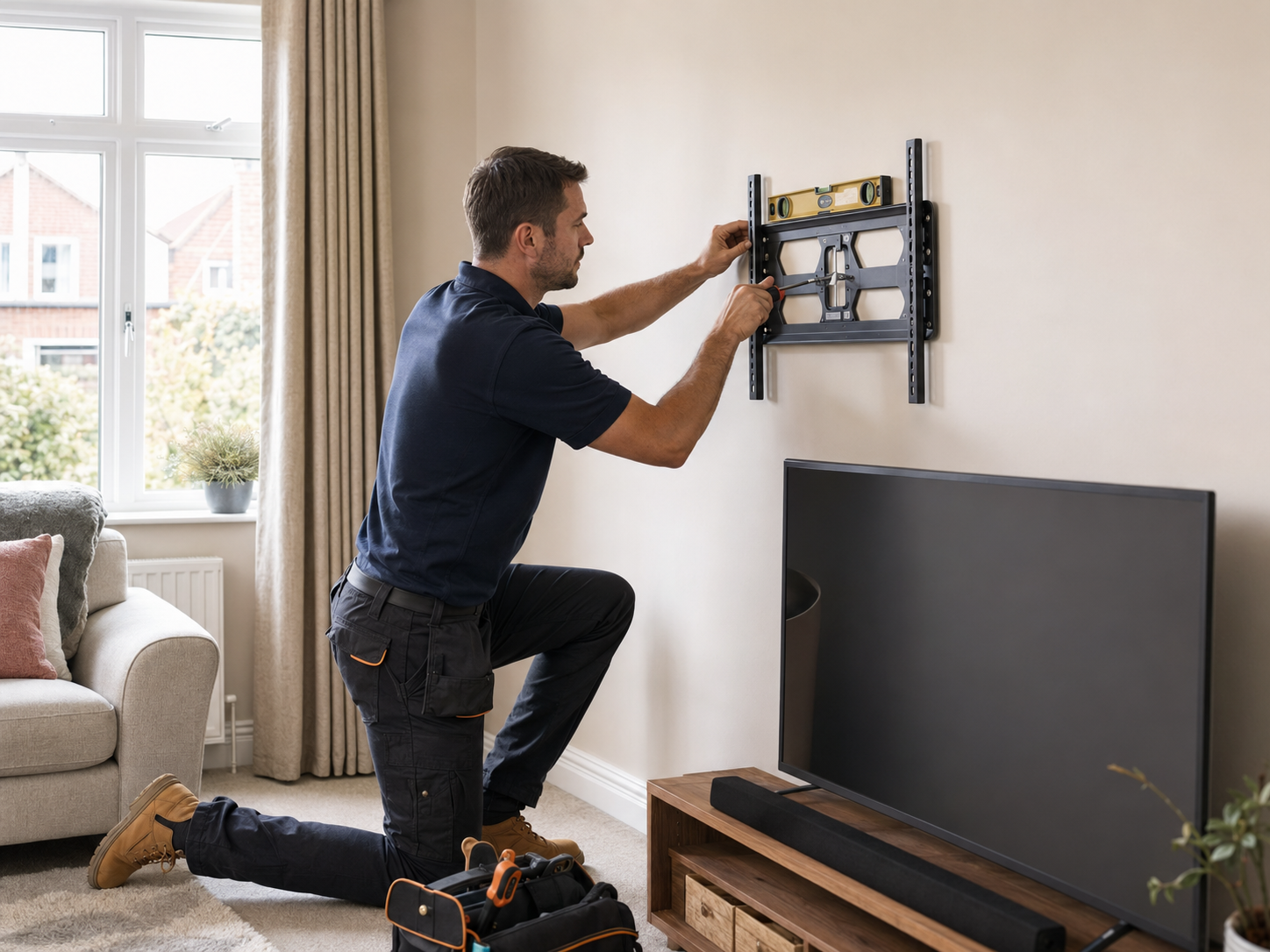
Buying a TV bracket is easier when you check the important details before comparing designs. A bracket that looks suitable may still be wrong for the television, the wall or the way you want to use the room.
Check the TV information first
Find the television model number, screen size and weight without the stand. Then check its VESA measurement. VESA describes the spacing between the threaded mounting holes on the back of the television. The bracket must support both that pattern and the television's weight.
Do not choose a bracket purely because the packaging mentions the right screen size. Two televisions of the same size can have different weights and mounting patterns.
Decide how the television should move
- A fixed bracket keeps the television close to the wall and suits a straightforward viewing position.
- A tilting bracket can help when the television needs to sit slightly above normal eye level.
- A full-motion bracket allows the television to move away from the wall and turn, but it places greater leverage on the fixings and needs more clearance.
Think about plugs, HDMI connections and aerial cables too. A very slim bracket can make sockets difficult to reach, especially when the connections point backwards.
Consider the wall
The wall construction affects the installation more than the television size alone. Solid masonry, timber studwork and plasterboard systems require different assessments and fixing approaches. If the wall type is uncertain, send clear photographs and any construction information before purchasing the bracket.
Plan the final position
Check the viewing height, nearby furniture, windows, radiators and cable route. Marking the television outline with low-tack tape can make the proposed size and height much easier to judge.
SB Home Assembly & Fittings can review your television details, bracket link, wall photographs and proposed position before confirming a fitting quote.