Floating shelves and traditional bracket shelves can both work well, but they suit different priorities. The right choice depends on appearance, intended use, wall construction and the shelf system itself.
Floating shelves
Floating shelves conceal most or all of the support, creating a clean appearance. They work particularly well for lighter decorative arrangements and spaces where visible brackets would feel busy.
Their performance depends heavily on the supplied support system and the wall. The shelf depth creates leverage, so the intended load and fixing position need realistic consideration. A shelf advertised with a high capacity under ideal test conditions may perform differently on another wall construction.
Bracket-supported shelves
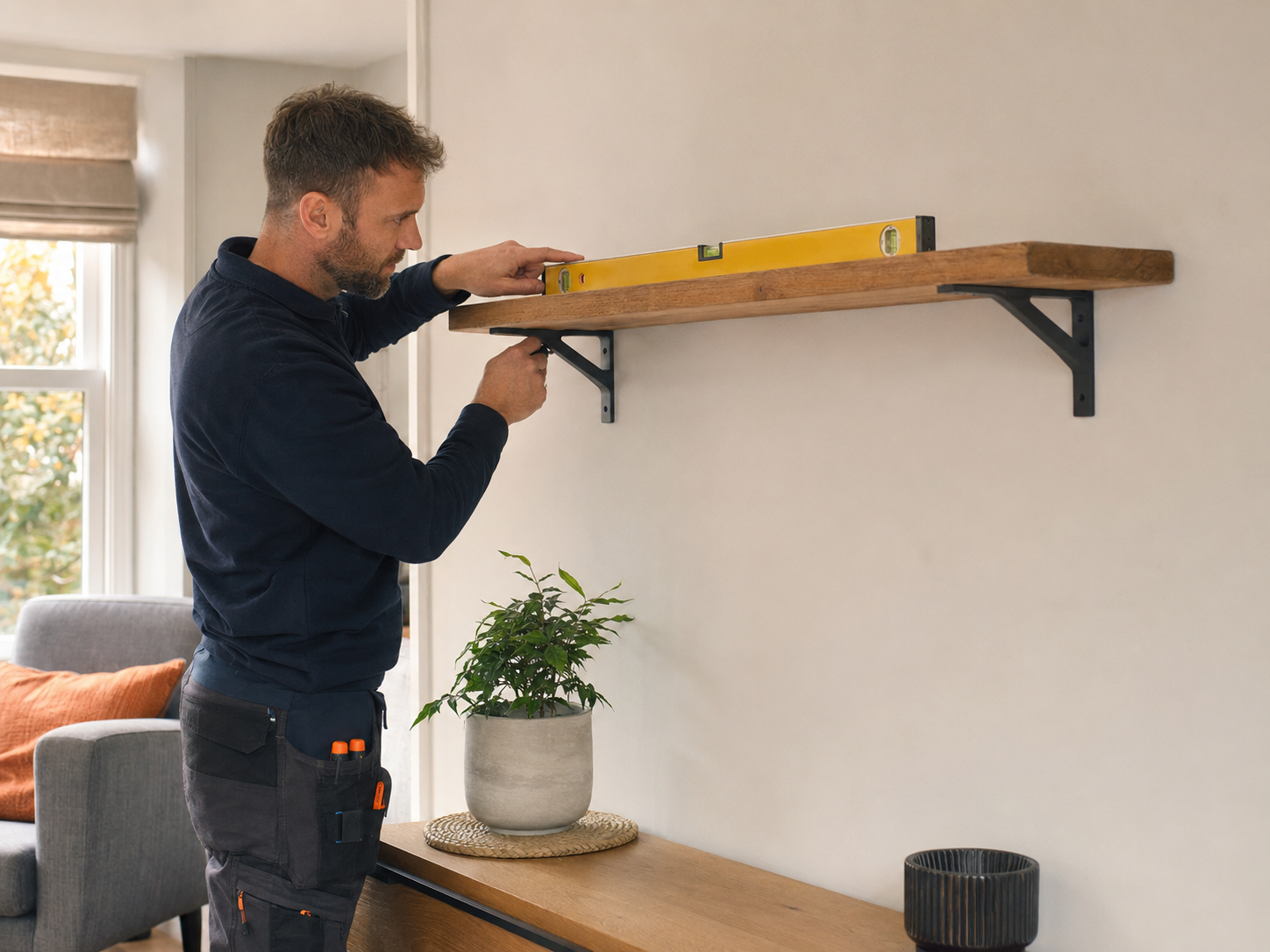
Visible brackets make the support easier to understand and offer more flexibility in shelf material, depth and positioning. They can suit utility areas, offices, kitchens and garage storage where practical strength matters more than a concealed finish.
Brackets also become part of the design. Black metal, timber and painted brackets can complement the room rather than appearing purely functional.
Questions to consider
- What will the shelf hold now and later?
- How deep is the shelf?
- What is the wall construction?
- Are the supplied fixings appropriate?
- Do you want concealed or visible support?
- Will the shelf need to align with existing furniture or tiles?
Avoid choosing by appearance alone
A shelf should be selected as a complete system rather than a board and some convenient fixings. Review the manufacturer's installation information and loading guidance. If the wall type is uncertain, obtain advice before purchasing several matching shelves.
For a quote, send the shelf link, wall photographs, quantity, approximate positions and a brief description of what the shelves will hold.